
The most flexible symbol in the catalog
Cars and highways show up in Springsteen songs more often than any other image, and they almost never mean the same thing twice. Across fifty years the car has been a getaway vehicle, a workbench, a confession booth, a coffin and a cage. The highway has been a promise, a police checkpoint and a dead end.
I have spent decades following these roads through his records, and tracing them is one of the purest joys of being a Springsteen fan. What follows is my reading of how the metaphor changes shape, roughly in the order he drove it. Where I interpret rather than report, I say so.
The car as escape: Thunder Road and Born to Run
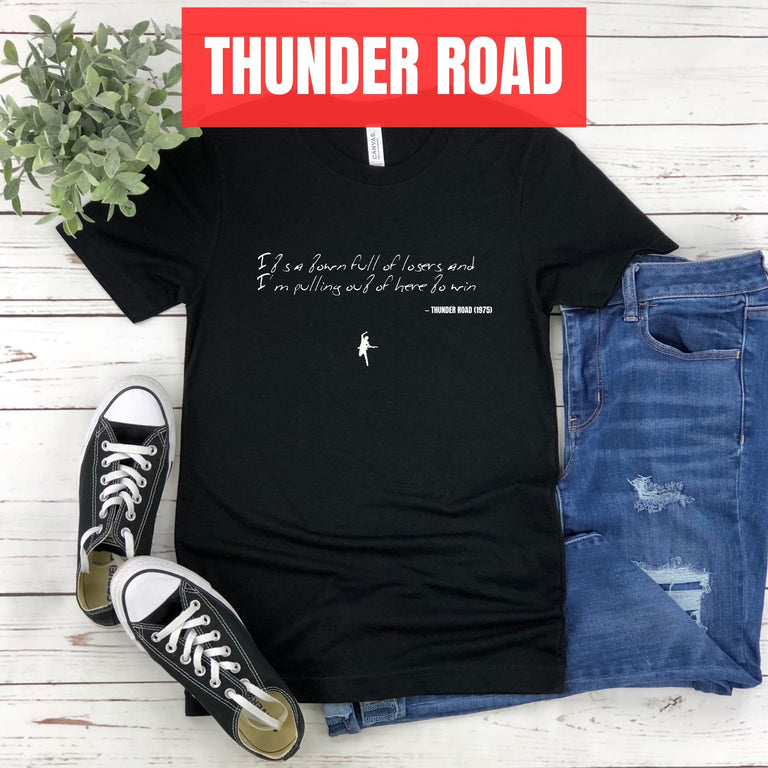
The 1975 Born to Run album is where the car first becomes a vehicle for salvation. In "Thunder Road" the narrator dismisses his surroundings as "a town full of losers" and announces he is "pulling out of here to win." The invitation to Mary is measured in distance: the long walk "from your front porch to my front seat."
What I love is the small print he attaches to the offer. "The door's open but the ride it ain't free," he warns her. Even at his most romantic, Springsteen knows escape has a cost, and he says so in the same breath as the promise.
The title track pushes the image to its limit. The highways are "jammed with broken heroes on a last chance power drive," and the town itself is "a death trap." Here the car is not a toy or a status symbol. It is the only exit door a young working-class kid can see.
The car as craft and pride: Racing in the Street
By Darkness on the Edge of Town (1978), the car stops being a way out and becomes a way of holding on. "Racing in the Street" opens with a spec sheet: a '69 Chevy with a 396, fuelie heads and a Hurst on the floor. That technical language is the narrator's pride talking. In a life with little control, the engine is the one thing he understands completely and has built with his own hands.
The song's first line also borrows the rhythm of Martha and the Vandellas' "Dancing in the Street", swapping the dance floor for the drag strip. It is a joyful nod, and it makes what follows hit harder.
Because the real subject is what happens to the people who stop. Springsteen describes men who "give up living and start dying little by little, piece by piece." My reading: racing is not escape here, it is resistance. The car keeps the narrator alive in the only arena where he still wins, and the closing promise to ride "to the sea" and wash the sins off their hands is as close to baptism as the song allows.
The car as confession booth: Stolen Car and Drive All Night
On The River (1980), Springsteen moves the camera inside the car and closes the doors. In "Stolen Car" a man whose marriage has gone cold drives at night in a car that is not his. He admits that "each night I wait to get caught, but I never do."
That line is the key to the whole song for me. The theft is small, almost symbolic. What he really wants is for someone to notice him, even if it is the police. The car has become a private room where he can say what he cannot say at home, and his fear is that "in this darkness I will disappear."
"Drive All Night" on the same album flips the confession into devotion. The narrator swears he would drive all night "just to buy you some shoes." The image is gloriously ordinary, and that is the point: on The River, love is proven by miles and effort, not grand gestures.
The car as class marker and mortality: Used Cars and Cadillac Ranch
On Nebraska (1982), "Used Cars" turns a family purchase into a lesson in class. A boy watches his father haggle at the lot, and the family drives home in what he bitterly calls their "brand new used car." His vow is the saddest punchline Springsteen ever wrote: the day he wins the lottery, he will never ride in a used car again.
The car here is a public verdict on the family's place in the world. The neighbours see it, the salesman sees it, and the child feels it. Notice that his only imagined way out is luck, not work. My reading: by 1982, the Born to Run faith in the open road has shrunk to a lottery ticket.
"Cadillac Ranch" from The River comes at mortality with a grin. The title refers to the 1974 art installation of half-buried Cadillacs near Amarillo, Texas, and the song lists cars and drivers who went to that final resting place, James Dean among them. The narrator begs his girl, "don't let 'em take me to the Cadillac Ranch." It is a party song about death, and only Springsteen could make a graveyard for cars sound like this much fun.
The policed road: State Trooper and Highway Patrolman
Also on Nebraska, the highway stops belonging to the dreamers and starts belonging to the law. "State Trooper" is a man driving the New Jersey Turnpike at night, pleading "Mister state trooper, please don't stop me." He has no licence and no registration, only what he calls a clear conscience about the things he has done.
The tension in that song comes from what is never said. We never learn what he did, and we never learn whether the trooper appears. The road has become a place where you are watched, and freedom now means not being pulled over.
"Highway Patrolman" tells the same story from behind the badge. Sergeant Joe Roberts chases his brother Franky to the Canadian line and then pulls over to let him go. His creed, that a man who turns his back on his family "just ain't no good," outranks his duty. Sean Penn later built his 1991 film The Indian Runner on this song, which tells you how much story Springsteen packed into one highway chase.
The road as dead end: Wreck on the Highway and Highway 29
The River closes with "Wreck on the Highway", its title taken from the country song Roy Acuff made famous. A man driving home "at the end of the working day" comes across a crash in the rain and watches a young stranger die. Later he lies awake beside the woman he loves, holding her tight.
For me this is the moment the Springsteen highway grows up. The same road that promised escape on Born to Run now delivers mortality straight to your windscreen, and the response is not to drive faster but to hold on to the people at home.
"Highway 29" on The Ghost of Tom Joad (1995) goes further into the dark. A shoe salesman falls for a customer, they commit a robbery, and the getaway ends in a wreck. The narrator hints that part of him wanted the road to end that way. The car that once carried dreams now carries a man toward the crash he half invited.
Walking instead of driving: Cautious Man, Tom Joad and Long Walk Home
One of the most telling shifts in the catalog is that his later characters often leave the car behind. On Tunnel of Love (1987), "Cautious Man" Billy Horton has "love" tattooed on one hand and "fear" on the other. One night he slips out of bed and walks to the highway, the old Springsteen escape route, and finds "nothing but road." So he goes back home to his wife.
I find that one of the bravest moments in his writing. The highway has lost its magic, and the adult choice is to return. The road is still there, but it no longer answers anything.
By "The Ghost of Tom Joad" in 1995, the people Springsteen sings about are "walkin' 'long the railroad tracks", too poor for a car at all. And on Magic (2007), "Long Walk Home" makes the return journey on foot. The narrator comes back to a town he barely recognises, and the distance home is now moral, not geographic. My reading: the less his characters can drive, the more the songs ask what kind of country they are walking back into.
The songwriter who could barely drive
Here is the fact that delights me most. According to David Kamp's 2016 Vanity Fair cover story, the young Springsteen was a terrible driver who did not get his licence until he was in his twenties, despite all those songs about the road. The car in his early songs was imagined before it was lived.
My interpretation: that explains why the early cars feel mythic rather than mechanical. They are symbols built from movies, radio and Jersey Shore boardwalk culture. The same profile quotes him saying he still pictures life itself as a car, which suggests the metaphor never stopped working for him.
On Western Stars (2019), the older Springsteen revisits the road with a body that has paid for it. The album opens with "Hitch Hikin'", a man with no car at all, and "Drive Fast (The Stuntman)" gives us a stunt driver counting his broken bones. The fast driving is still there, but now it is a job with injuries, not a dream.
Why the metaphor lasts
The car works for Springsteen because it is the one possession that is both private and public. You sit alone in it, yet everyone can see it. That double nature lets him use the same object for freedom, shame, love, guilt and death without the image ever wearing out.
Followed across the albums, the cars also tell the story of a man getting older alongside his audience. The kid who wanted to strap his hands across the engine becomes the husband who walks back from the highway, and later the stuntman who limps away from the wreck.
That is why I keep coming back to these songs. Every time I put on "Thunder Road" I hear the screen door and the engine, and every time I put on "Cautious Man" I hear the road go quiet. Both are true, and Springsteen was brave enough to write both.